I write speculative fiction, cultural criticism, humor, and journalism, with a particular interest in retrofuturism, video games, fandom, and forgotten corners of pop culture history. My work has been published by Wired, Rolling Stone, Slate, McSweeney’s, Alta Journal, Flash Fiction Online, Underland Press, and Nature: Futures. I also publish the newsletter Pop Cultural Precursors.
REVIEW: Daisy Goes to the Moon
|
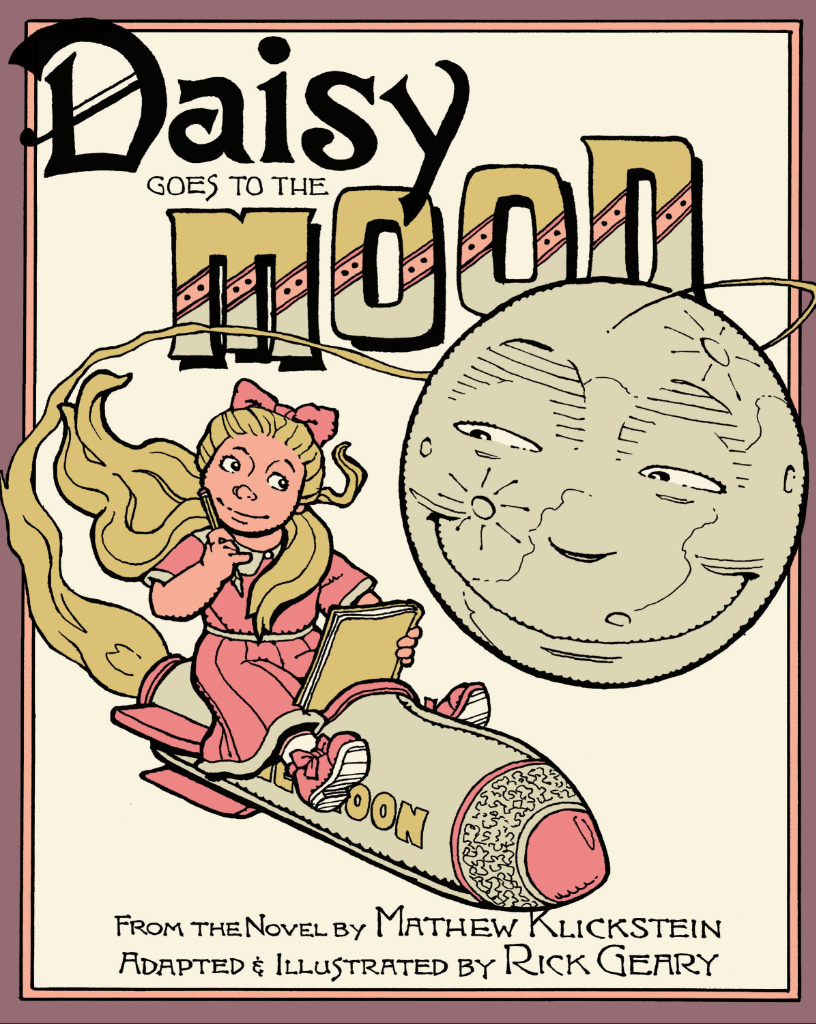
After a century's delay, a literary sensation written by a 9-year-old gets a sequel. Daisy Ashford created a viral sensation more than half a century before the Internet was invented. She was a precocious child from an upper-class family in East Sussex who penned a story called The Young Visiters or Mister Salteena's Plan when she was just 9 years old. Now, 135 years after Daisy Ashford penned that story, and 53 years after Ashford passed away at age 90, The Young Visiters is geting a sequel in the form of a graphic novel from the esteemed Seattle-based comics imprint Fantagraphics. The story behind this homage is almost as weird and fanciful in its own right as the story that 9-year-old girl dreamed up in 1890
.I want to stress that The Young Visiters or Mister Salteena's Plan is an utter hoot. Ashford’s childish spelling errors and stilted diction only serve to intensify its charms. “Mr Salteena was an elderly man of 42,” she wrote. His “wiskers” were “very black and twisty,” and he wore his top hat at all times because he “thorght it becoming.” Daisy spins a fanciful tale of romance and manners among the gentry. Her protagonist Mr. Salteena aspires to become a gentleman despite his advanced age of 42, and strives to educate himself about requisite topics, like “clothes and ettiquett to menials.” Salteena is aided in his quest by the Prince of Wales himself, and he eventually “marrid one of the maids in waiting at Buckingham palace by name Bessie Topp a plesant girl of 18 with a round red face and rarther stary eyes.” The story was a lark scribbled in an exercise book in 1890, but when it was dusted off and published 30 years later, with all of its misspellings intact, it quickly became a word-of-mouth literary sensation. The public adored the charming naivete of Daisy’s writerly voice and the absurdist child’s-eye view of life among the aristocracy in the Victorian era.
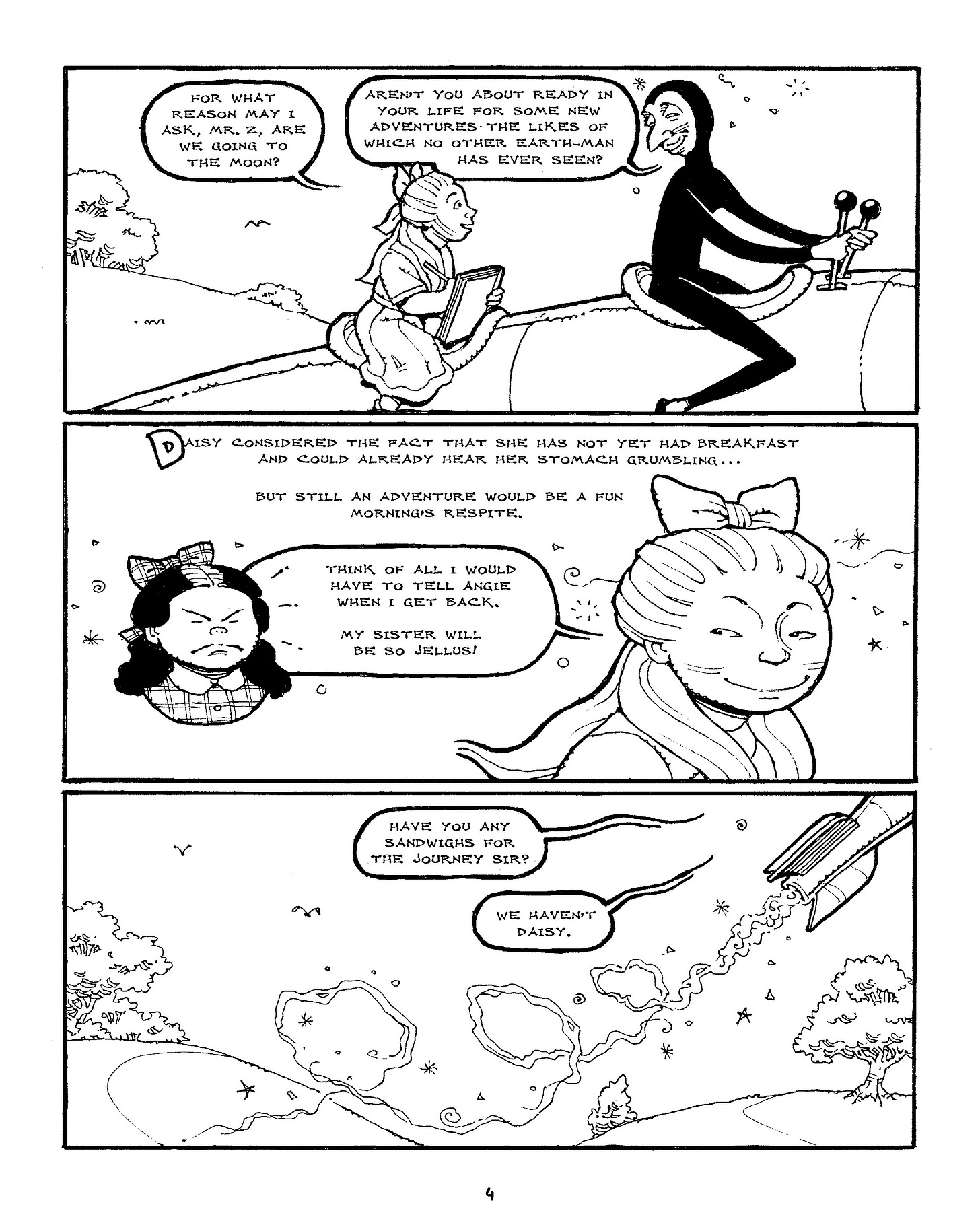
The fact that it was written by a 9-year-old wasn’t a drawback, it was the central selling point of the book. The frontspiece is a photograph of the prepubescent authoress with an impudent half smile and a trace of lingering baby fat. “This is no portrait of a writer who had to burn the oil at midnight—indeed there is documentary evidence that she was hauled off to bed every evening at six,” wrote J. M. Barrie in the preface. “It has an air of careless power; there is a complacency about it that by the severe might perhaps be called smugness. It needed no effort for that face to knock off a masterpiece.” Matthew Klickstein, an American journalist and screenwriter with a taste for outsider art, became obsessed with the wunderkind’s novel. He read it and reread it, devoured her other published works, and hunted down a short biography of Daisy written by her niece in the 1980s. Then on a lark, Klickstein wrote a novella in the fax-naif style of Diasy Ashford. It starred Daisy herself, and sent her on a rocket trip to the moon. Klickstein’s fantastical storyline owes a debt to works of the period penned by Lewis Carroll and L. Frank Baum, but the authorial voice he channels is pure Daisy, right down to the sprung spellings—one speech balloon has the young protagonist remarking, “What a pleashur it will be to meet the driver of this quear rokit!”
The American cartoonist and commercial illustrator Rick Geary provides the visuals, and it’s impossible to imagine anyone who’d be better suited to the task. He has a crisp, meticulous style of inking that can look eerily like engravings and illustrations from the late 19th century, and he’s always displayed a fascination with history and literature of the era, crafting comicbook adaptations of Dickens and Brontë and HG Wells, and publishing a long-running series of grisly true crime comics under the title A Treasury of Victorian Murder. (The volumes about Jack the Ripper and the Glasgow socialite and accused arsenic poisoner Madeleine Smith are highlights.) Geary’s clean lines help to anchor a work that could’ve easily spun off into the ether of whimsicality Part of the charm of this graphic novel is that absolutely no one in the world was clamoring for this—Klickstein was motivated by his own adoration for an obscure and virtually forgotten piece of Victoriana. This book is as surprising and as uncalculated in its own way as little Daisy Ashford’s story of Mr. Salteena was in its day. After the story of Daisy Goes to the Moon concludes, there’s a final gag page in which Kilickstein and Geary promise an additional sequel, Daisy Goes Punk, that would see young Miss Ashford cavorting with downtown scenesters like Warhol and David Byrne and Patti Smith. I found myself wishing it was more than just a larky sendoff. |

Genre Exercises
I write speculative fiction, cultural criticism, humor, and journalism, with a particular interest in retrofuturism, video games, fandom, and forgotten corners of pop culture history. My work has been published by Wired, Rolling Stone, Slate, McSweeney’s, Alta Journal, Flash Fiction Online, Underland Press, and Nature: Futures. I also publish the newsletter Pop Cultural Precursors.
Read my dystopian sci-fi horror about End Times Reply Guys. "I don’t enjoy playing the role of That Annoying Internet Guy who reflexively replies with hectoring know-it-all comments like 'Why are you surprised?' or 'How is this news?' But people force me..." Read it here
Sorry, Villeneuve and David Lynch. This version wins even though it never made it past pre-production... Read about it in my newsletter.
NEW NEWSLETTER: In 1985, an ambitious game simulated the ruinous long-term effects of a conservative political agenda on a Midwestern city. It now feels less like dystopian sci-fi and more like current events. Read it here.